
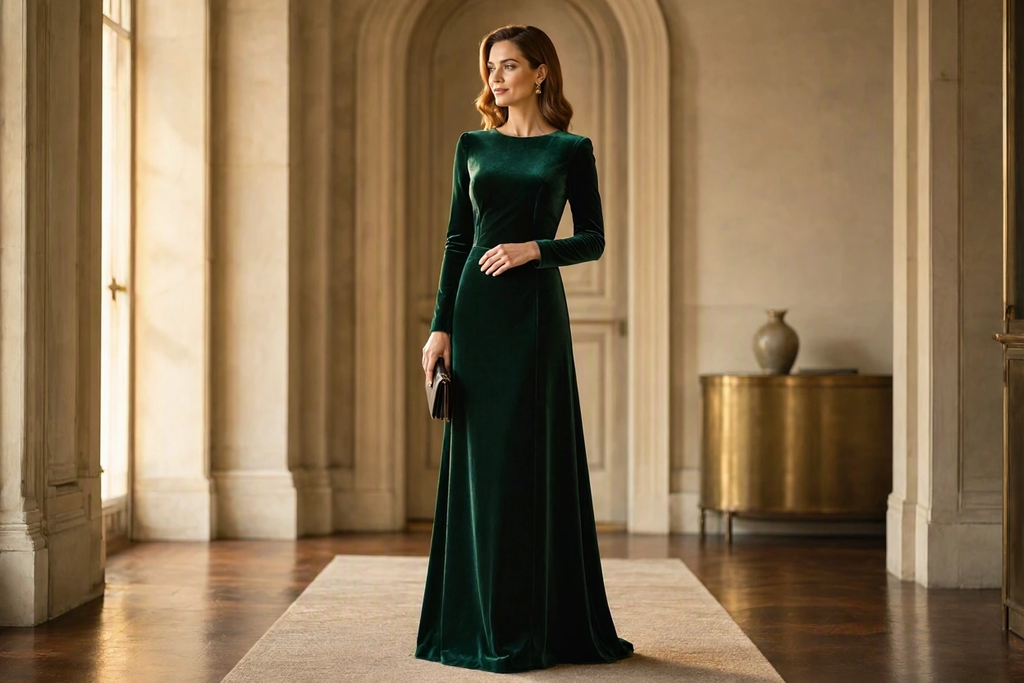
Weddings ask a lot of one outfit. You sit through a ceremony, stand for photographs, eat, dance, and often move between a cool venue and a warm one. A long sleeve dress suits that day well, whether you want covered arms for the season, the venue or your own comfort. These long sleeve dress wedding guest styling tips are built around the problems guests actually face: the dress code, the setting, the hours of wear and the camera. For everyday outfits, the guide on how to style a long sleeve dress covers that ground.
Read the dress code before you choose the sleeve
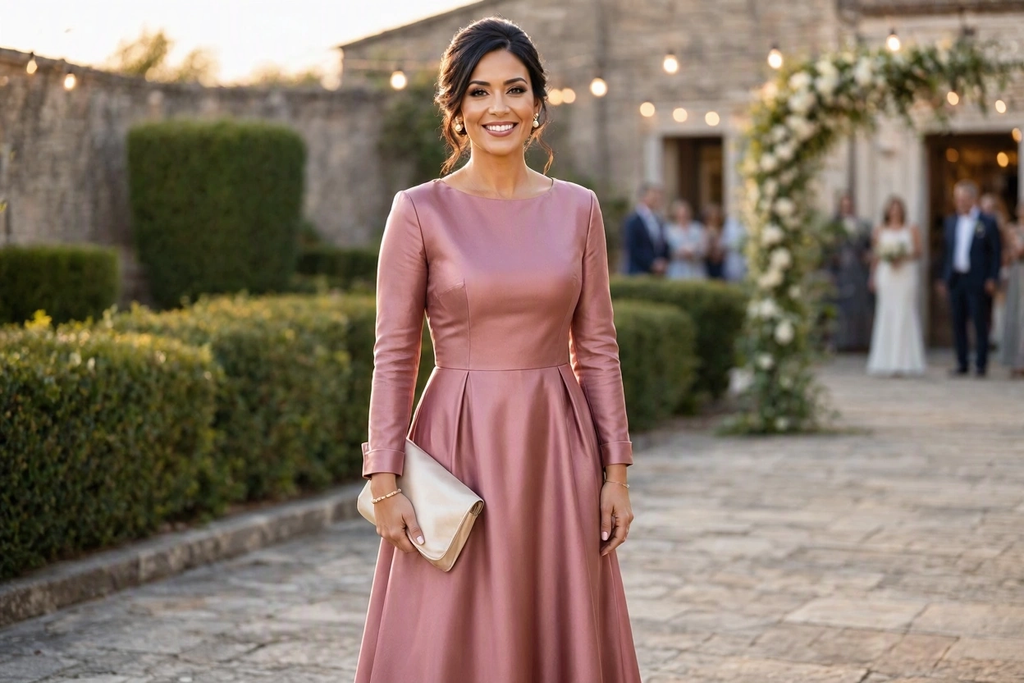
The invitation tells you how formal the sleeve and hem should be. Black tie calls for a floor-length gown, where a long sleeve in satin, crepe or velvet looks entirely at home. Black tie optional and formal invitations allow a floor-length dress or a very elegant midi. Cocktail attire points to a hem between the knee and mid-calf.
The sleeve changes the formality of a dress as much as the length does. A sleek, fitted sleeve in matte crepe looks modern and tailored. A sheer or lace sleeve reads more traditional and dressy. If the wording is vague, such as “festive” or “dressy casual,” check the couple’s wedding website, which often describes the venue and the mood. You can also ask someone close to the couple.
Pick a fabric that photographs well and moves beautifully
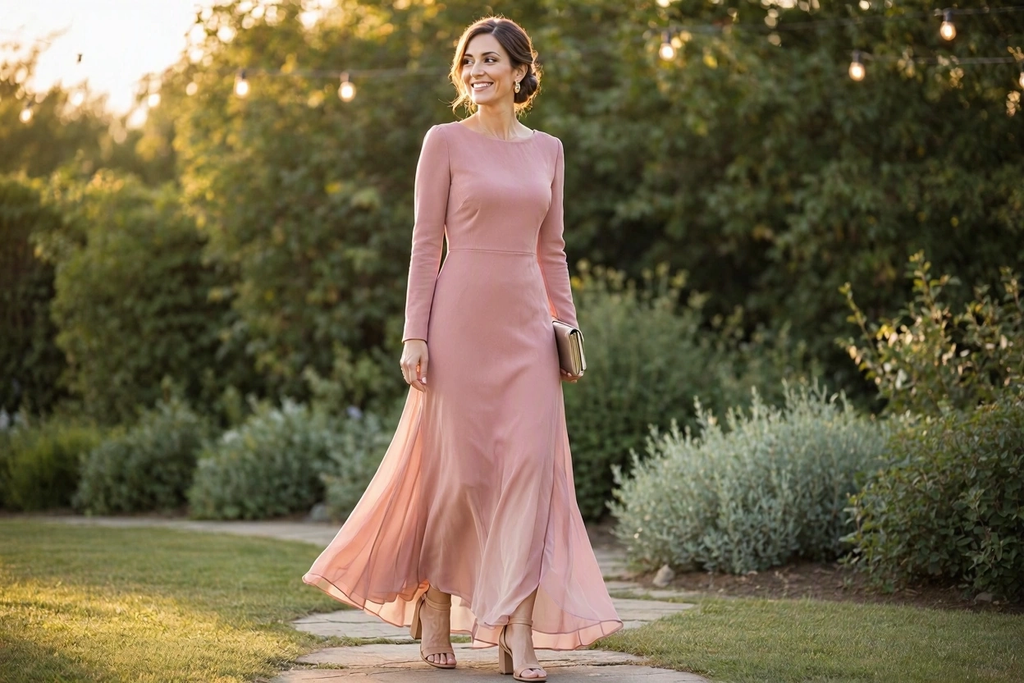
Wedding photographs are taken in changing light, often with flash in the evening. Fabrics with some weight, such as crepe, heavy satin, velvet and structured jacquard, hang cleanly and hide small creases. Thin, shiny satin shows every wrinkle at the elbow and waist after an hour in a chair.
Movement matters for the reception. Chiffon, georgette and silk sleeves catch air as you walk and dance, which looks graceful in candid shots. Before the day, sit down in the dress in front of a mirror, then take a photo of yourself with your phone flash on. You will see how the fabric creases and reflects light.
Balance the neckline and the sleeve so the dress doesn’t feel heavy
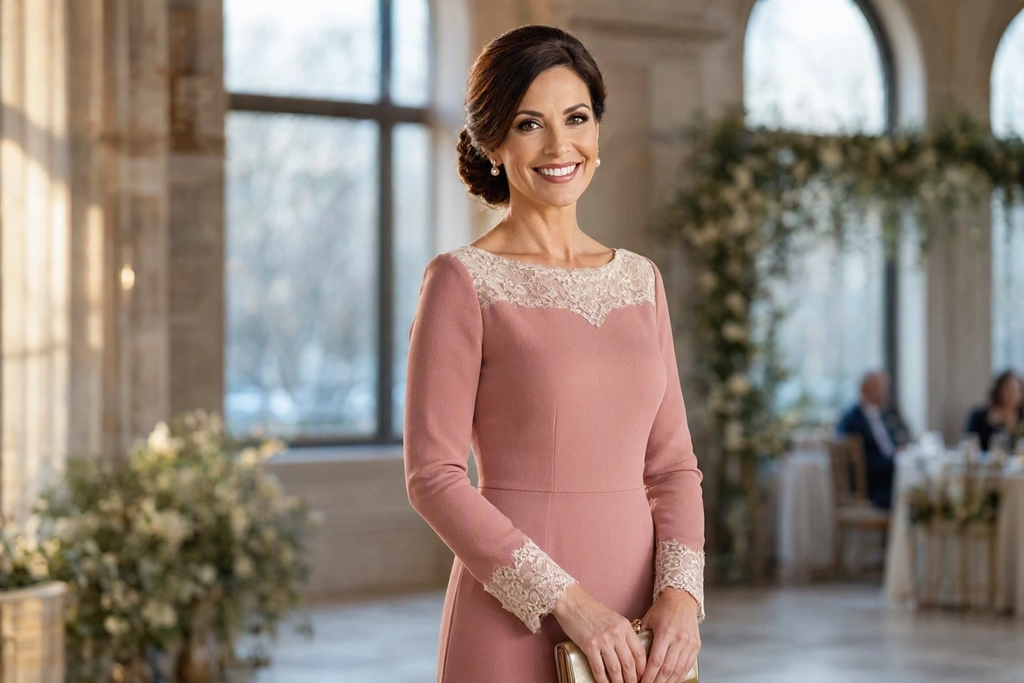
A long sleeve adds visual weight to the upper body, so the neckline decides whether the dress feels elegant or covered up. A fitted sleeve pairs well with a more open neckline: a bateau, a square neck, a V or an off-the-shoulder cut with sleeves attached. A voluminous bishop or balloon sleeve works best with a clean, simple neckline.
A high neck, a fitted sleeve and a long hem together cover a lot of the body. If you love that combination, look for one point of interest elsewhere, such as an open back, a soft slit or a draped waist. One focal point per dress keeps the outfit polished.
Choose colors that flatter you and stay clear of the bride’s
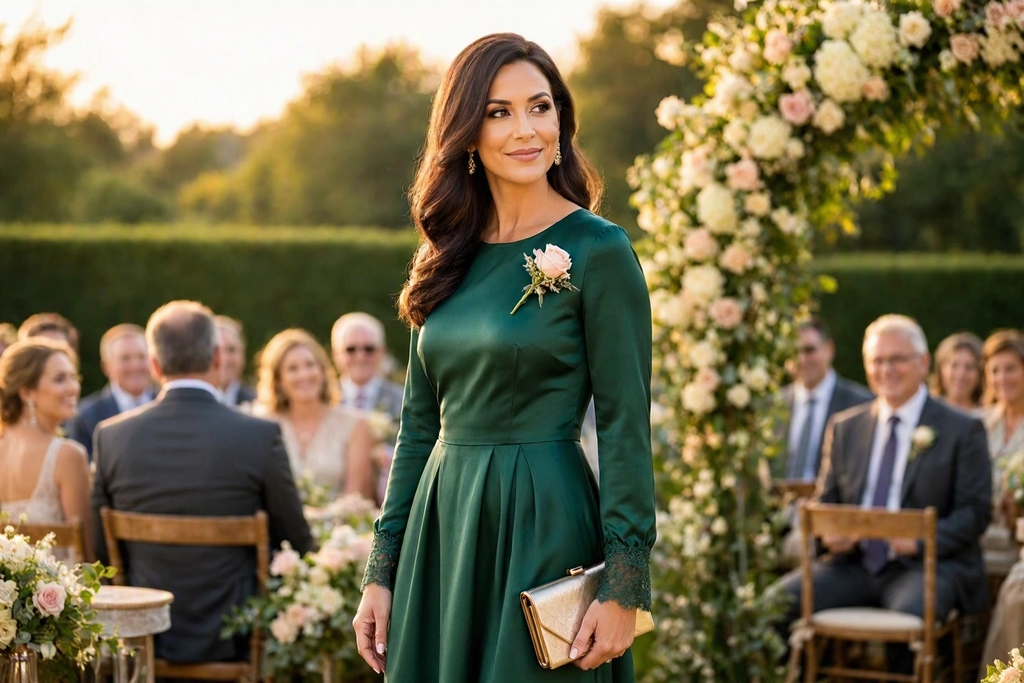
Do not wear white, ivory or any pale shade that could read as white in photographs, and check whether the couple has asked for a specific palette. Some wedding traditions also have their own conventions about which colors guests wear, so find out if the celebration follows one.
Beyond that, pick the shade that suits your skin. Hold a few fabrics near your face in daylight: deep emerald, burgundy, navy, plum and dusty rose each flatter different complexions. Black works for many evening weddings and looks refined in long sleeves. In a garden or daytime setting, softer tones such as sage, powder blue or mauve suit the light and keep attention on the couple.
Match the dress length to the venue and time of day
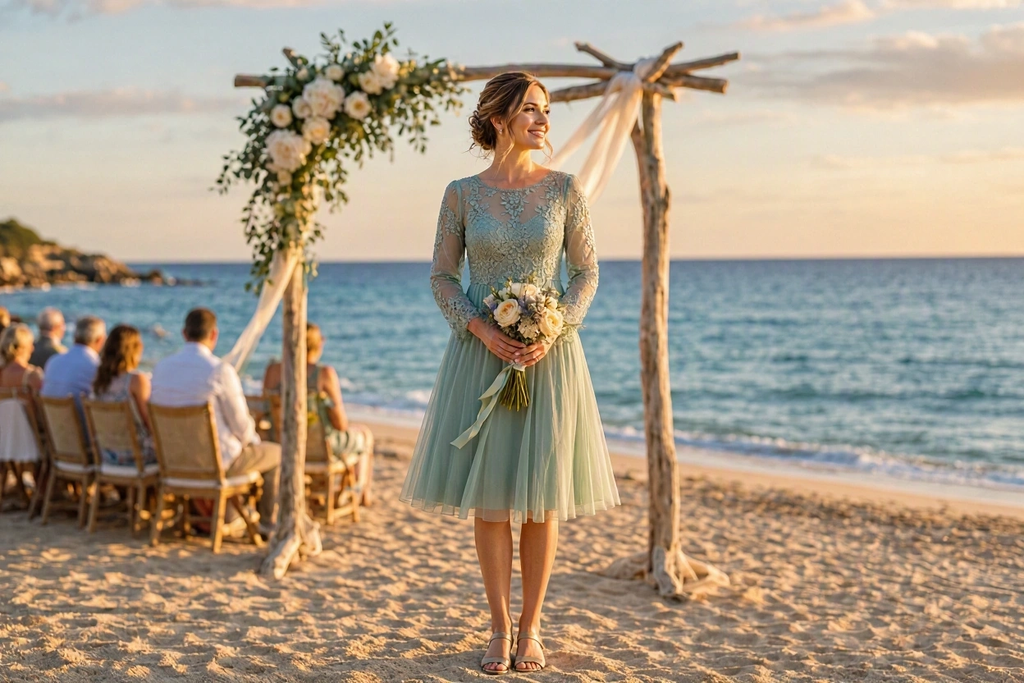
A daytime ceremony in a garden or vineyard suits a midi or tea-length dress with a flowing skirt. An evening ballroom or a formal church wedding suits a floor-length hem. The ground surface matters as well: on grass, gravel or cobblestones, a hem that brushes the floor will pick up damp and dirt, and heels can catch it.
Try the dress on with your actual shoes and check that the hem sits just above the floor when you walk. If the venue has stairs, lift the hem as you climb and make sure the skirt is not so narrow that you cannot take a full step. Tailoring the length once, to the shoe you plan to wear, is worth it.
Add a statement earring and keep the neck bare
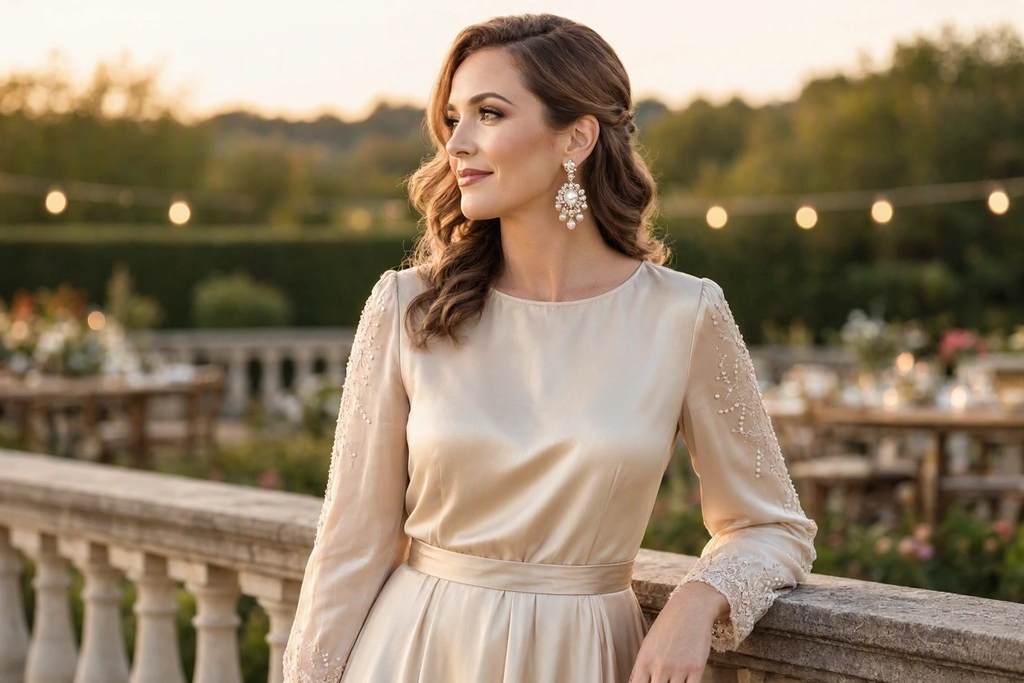
Long sleeves and a covered neckline already fill the frame from shoulder to wrist. A necklace on top competes with the neckline and can tangle with the collar. A bold earring finishes the look near the face, which is where photographs focus.
Choose sculptural drops, large pearls, crystal chandeliers or a polished gold statement piece. Skip bracelets over the sleeve, since they bunch the fabric when you move your arms. One or two rings are enough on the hands. For more on building a small, versatile jewelry and accessory collection, see fashion accessories every woman should own.
Select a clutch and shoes you can wear through the whole day
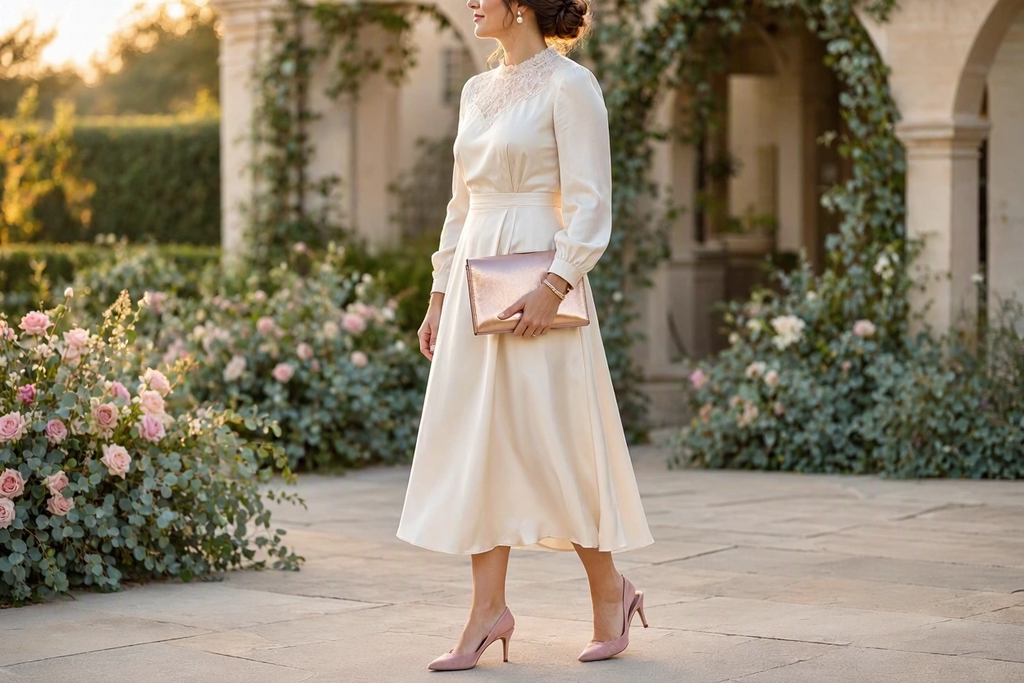
You may be in these shoes from the ceremony until the last song. Choose a block heel, a kitten heel or a cushioned pointed flat in a stable shape, and walk around your home in them for an hour beforehand. On grass, a block heel or a wedge will not sink the way a stiletto does.
For the clutch, choose a small, structured shape in a finish that suits the dress: satin, metallic leather or beaded. It needs to hold a phone, a lipstick and a tissue. A removable chain strap frees your hands for a glass and a plate. Match the metal tone of the hardware to your earrings so the accessories look chosen together.
Layer for chilly ceremonies with a wrap or tailored coat
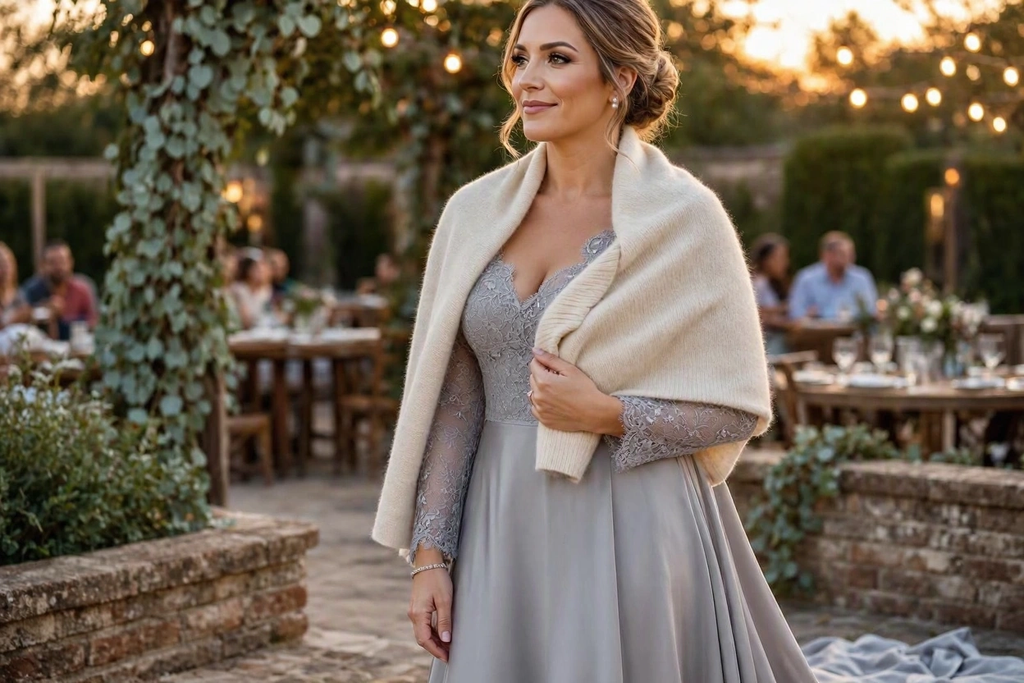
Ceremonies are often in churches, stone buildings or outdoor spaces that stay cool even when the reception is warm. A long sleeve dress helps, but a layer lets you stay comfortable without covering the outfit you chose.
The layer should not crush the sleeve:
- A cashmere or silk wrap drapes over the shoulders and leaves the sleeves smooth.
- A cape or poncho-style topper gives warmth with no armhole to squash a voluminous sleeve.
- A tailored coat in camel, black or ivory-free neutrals suits a winter wedding, as long as the armholes are roomy enough for the sleeve underneath.
Take the layer off for the formal photographs so the dress is visible.
Use a belt or waist detail to shape a column or flowing silhouette
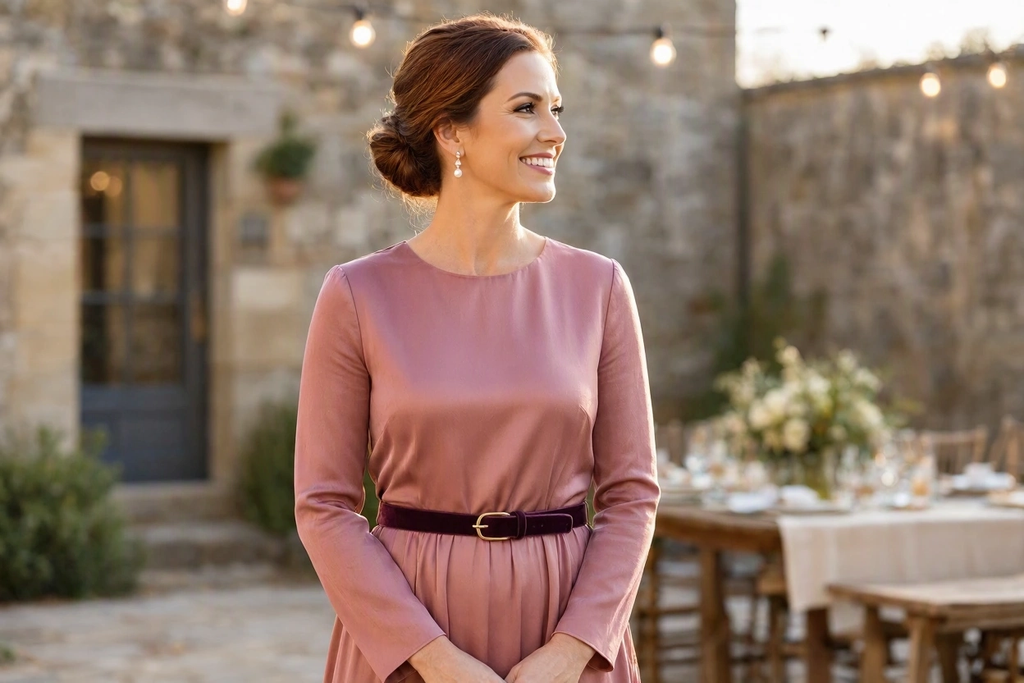
A column dress in long sleeves can look straight and flat from the front. A thin belt or sash in the same color as the dress defines the waist without breaking the line. A flowing, A-line or wrap-style dress looks best with a belt at the natural waist, which gives the skirt a clear starting point.
Some dresses already have a ruched waist, a draped sash or a seam that does the shaping, and those need no belt. Keep any belt narrow if the fabric is thick, because a wide belt over heavy velvet adds bulk. Make sure the belt is comfortable when you sit, since a tight waistband becomes noticeable by the dessert course.
Style your hair to show off the sleeve and neckline
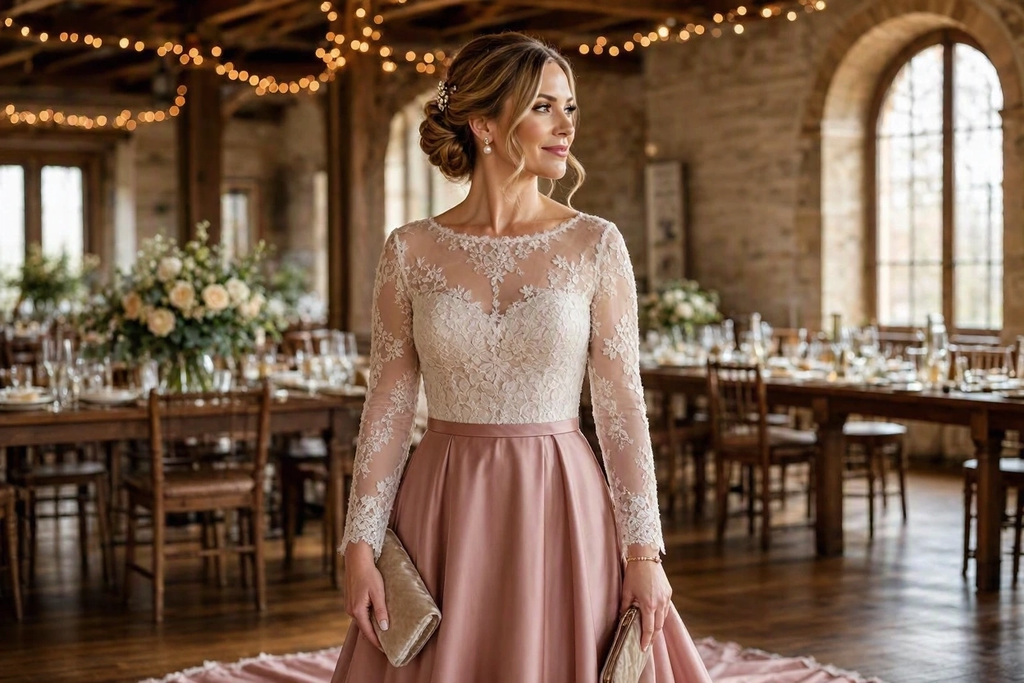
Hair that falls over the shoulders hides the neckline and the top of the sleeve, which is often where the dress’s best detail sits. An updo, a low bun or a sleek ponytail keeps the neck and shoulders visible and gives your earrings room to show.
If you prefer to wear your hair down, sweep it to one side so one earring and one shoulder are clear. Loose waves suit a garden wedding, while a polished chignon suits black tie. For outdoor venues with wind, pin everything securely and carry a few extra pins in your clutch.
Plan for the weather: autumn, winter, and summer evenings
Each season changes the fabric and layers you need:
- Autumn: Velvet, crepe and jacquard in jewel tones suit the season. Mornings and evenings can be cool, so bring a wrap. For more ideas on dressing for the season, see how to style outfits for fall 2026.
- Winter: Heavier fabrics, opaque or sheer tights, closed or covered shoes and a warm coat make sense. Indoor venues are often heated, so choose a lined dress that does not trap heat.
- Summer evenings: Pick sheer, chiffon or georgette sleeves that let air through. Temperatures drop after sunset, so a light wrap helps.
Check the forecast the week before and again the morning of the wedding.
Finish with a final check for sitting, dancing and photos
Before you leave, run through a short test in front of a full-length mirror:
- Sitting: Sit down and check that the skirt does not ride up and the waist does not pinch.
- Arms: Lift both arms and hug someone. The sleeves should not pull at the shoulder or slide up past the wrist.
- Dancing: Take a few steps and turn. The hem should clear your shoes, and the fabric should not cling or cling statically.
- Photos: Take pictures in natural light and with flash. Look for creases, see-through patches and any detail that looks different on camera.
Steam the dress the day before, and pack fashion tape, blotting papers and a few safety pins in your clutch. A guest who has tested the dress this way can enjoy the day without adjusting it.