

Winter fashion looks different depending on where you stand. A camel coat that works in Boston will feel absurd in Houston in the afternoon, and a suede boot that looks perfect in Dallas will be ruined by a week of Seattle rain. The advice below is organized by city first, then by the three pieces women ask about most when the weather turns: ankle boots, sneakers and white jeans.
The approach throughout is to buy fewer, better pieces and choose them for the weather you actually have. Plus size readers are covered in each section, because fit decisions such as coat shoulders, sleeve room and boot calf width change what “investment piece” means. For what is trending this season, see our guide to 2026 winter outfit trends for women. This guide is about what holds up and keeps looking good.
What to wear in winter in Texas: layers that come off as the day warms
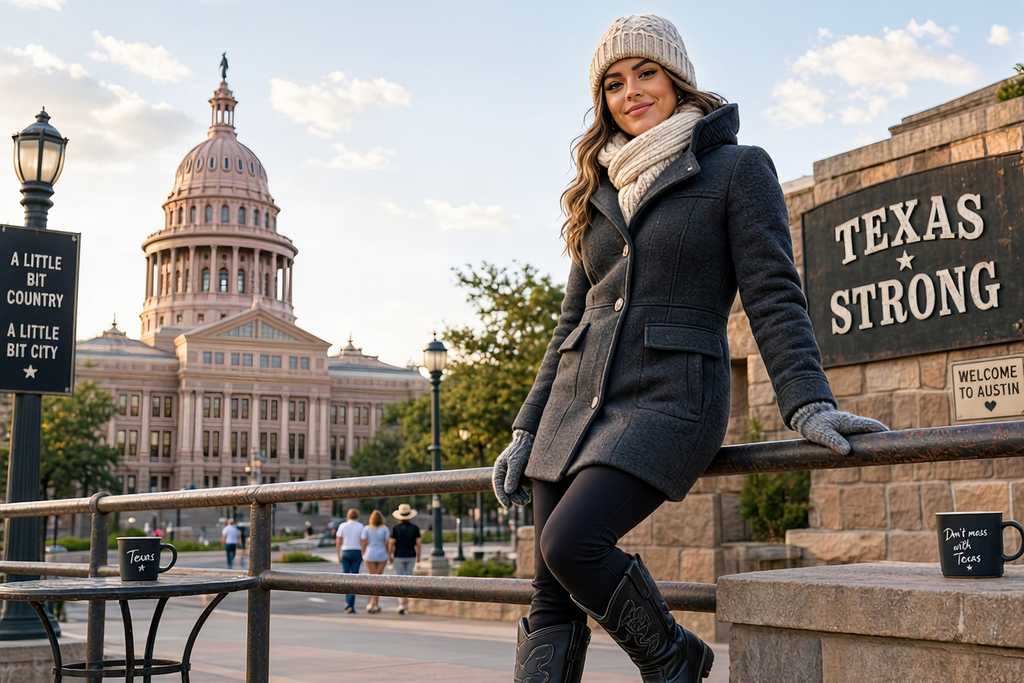
Texas winters swing. A cold front can arrive overnight and leave a morning that needs a real coat, followed by an afternoon warm enough for bare wrists. Dressing here means building outfits in layers that each look finished on their own, so you never end up carrying something that only worked as a base.
Start with a fine-gauge knit as the middle layer. A merino or cashmere crewneck or turtleneck looks elegant alone, fits under a blazer or coat, and takes up little room in a bag when you remove it. Avoid thick, bulky knits as your main layer in Texas. They are the hardest piece to take off and the hardest to carry.
For the outer layer, choose a coat or jacket with a clean, structured shape rather than heavy insulation. Good options:
- A tailored wool-blend coat in a mid weight, which handles a cold morning without overheating you at lunch.
- A leather or faux leather jacket worn over a knit, which blocks wind and looks polished at dinner.
- A long, unlined trench in a heavier cotton, worn over a sweater on the colder days.
Dresses and skirts work well in Texas because the warmth lives in the layers on top. A midi knit dress with opaque tights and a knee-high or heeled boot gives you coverage when it is cold, and you can switch to bare legs and a shorter hem on a warm day if you build the outfit around the boot rather than the tights.
Fabric matters more than thickness. Natural fibers such as wool, cashmere, silk and cotton let heat escape when the temperature rises, so you stay comfortable through a day that changes. Heavy synthetics trap heat and make a mild afternoon uncomfortable.
For plus size readers, the layering approach has a practical advantage: several thin pieces let you adjust fit and warmth without bulk at the bust, arms and midsection. Look for knits with some stretch, coats with a bit of room across the back and shoulders, and a belt you can use to define the waist over or under the outer layer. If a coat only closes by pulling across the bust, it will look strained, so size up and have the waist and sleeves tailored.
What to wear in winter in Chicago: let the coat do the heavy lifting
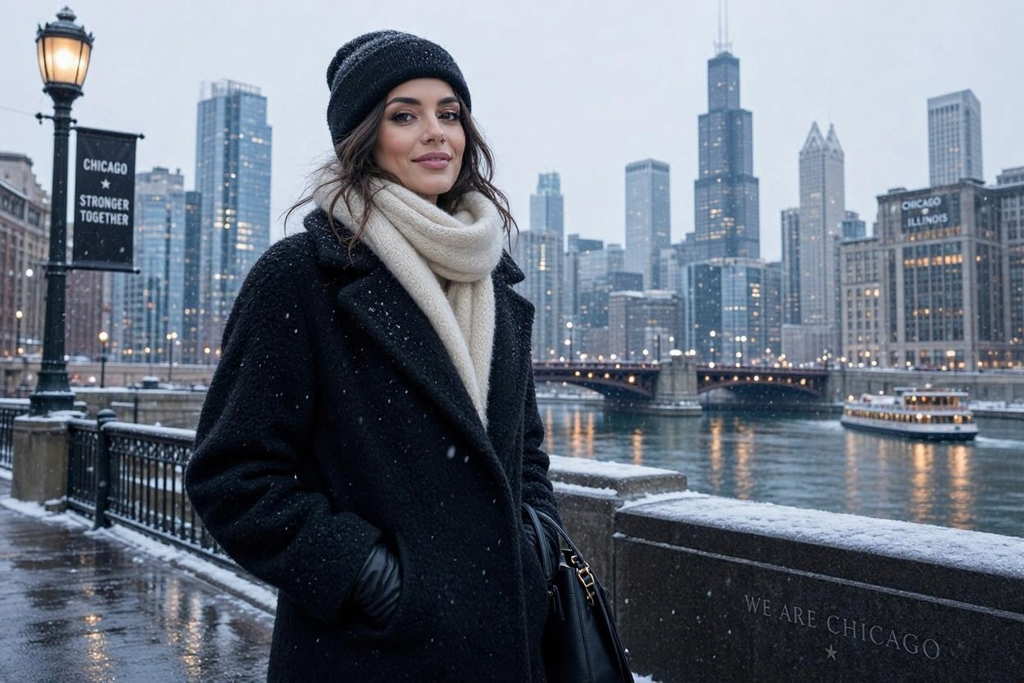
Chicago winters are cold, windy and long. In that weather the coat is the outfit, because it is the only piece most people will see on the street. That is the reason to spend most of your winter budget there.
A winter coat for Chicago needs three things: real warmth, wind resistance and a length that covers your thighs or goes to the knee. Wool with a dense weave blocks wind well, and a wool-cashmere blend feels softer and drapes better. A down-filled coat with a sleek, streamlined cut is a legitimate luxury option if the quilting is narrow and the shape is long. A coat that ends at the hip leaves your thighs exposed to the wind, which is where cold gets in.
Look for these details when you are choosing:
- A collar that sits high enough to fold up around your neck, or a detachable hood lined in something that doesn’t look sporty.
- Deep pockets that can hold gloves.
- A lining that is smooth, so the coat slides over knits instead of catching.
- Sleeves long enough to cover the wrist when you reach forward.
Under the coat, the clothes can be quiet. A thin thermal layer in silk or fine merino under a sweater, wool trousers or a lined skirt, and tall boots will carry you through the day. Because the coat hides most of the outfit, put effort into the parts that show: a good scarf, leather gloves and a hat in the same color family as the coat. Matching tones in a neutral palette, such as camel, charcoal, ivory or black, look deliberate and expensive.
Footwear should handle snow and salt. Choose a boot with a rubber or lugged sole and a leather or treated upper, and keep the heel low or block-shaped. Slush ruins suede and smooth soles are dangerous on ice. If you commute in boots and change at the office, a pair of polished flats or loafers in your bag is the practical solution.
For plus size readers, outerwear is where extended sizing matters most. Check the sleeve length and the arm circumference, since a coat can be labeled in your size and still bind across the upper arm over a sweater. Try it on with the thickest knit you plan to wear underneath. If the coat is cut for a larger bust, ask a tailor to take in the shoulders or hem the sleeves, which is a modest cost compared with the price of the coat.
What to wear in winter in Seattle: rain-ready layers that still look polished

Seattle’s winter is mild compared with Chicago but damp for months at a time. The issue is moisture rather than temperature. Wool coats soak through, leather scuffs and light shoes fail. Outfits here need to stay presentable after hours in light, steady rain.
The most useful piece is a water-resistant coat with a refined cut. A belted trench in a treated cotton or a technical wool with a water-repellent finish keeps you dry without looking like hiking gear. Choose a color that hides splashes, such as stone, navy, olive or black. A hood is practical, and many women in rainy cities prefer one that is attached, since umbrellas are awkward in wind and on crowded sidewalks.
Layer for dampness with fabrics that stay warm when slightly wet. Wool does this better than cotton or most synthetics. A merino sweater under the coat, wool-blend trousers and a pair of waterproof leather boots form an outfit that works from morning to evening. Wide-leg trousers that drag on wet pavement are a problem, so choose a cropped or ankle-length hem that clears the boot.
Boots do the most work in Seattle. A Chelsea boot or ankle boot in waterproofed leather, with a rubber sole and a low block heel, handles puddles and looks tidy at dinner. Treat leather with a protective spray before the season starts, and wipe boots dry after wearing them. Suede only works if you have treated it and will not wear it on the wettest days.
Accessories can stay simple: a structured leather bag that wipes clean, a wool or cashmere scarf and a hat that tolerates rain. A silk scarf looks beautiful but is easily spoiled by water, so save it for dry evenings.
Plus size readers should look for water-resistant coats with an adjustable waist, such as a belt or drawcord, because the shape of a trench relies on cinching. Check that the belt is long enough to tie comfortably over layers, and that the coat length reaches below the hip so it covers your outfit when it rains sideways.
What to wear in winter in Boston: elegant layers for long walk

Boston is a walking city, and winter there combines cold, wind, damp air and occasional snow. You may be outside for twenty minutes between a train and an office, or for hours on cobbled streets. The outfit has to be warm enough for standing still and comfortable enough for movement.
Think of Boston as a blend of Chicago and Seattle. You want the coat length and warmth of the first and the moisture resistance of the second. A long wool coat with a dense weave is a good base, and it should have a lining that adds warmth without making the sleeves tight. If you walk a lot, a coat that is slightly lighter than you think you need, paired with a warm layer underneath, will be more comfortable than a heavy one that makes you hot as soon as you step into a building.
Build the layers from the skin outward:
- A thin base layer in silk or merino under dresses and trousers.
- A knit that can serve as the main top, such as a turtleneck or a polo-collar sweater.
- A scarf that you can loosen when you go inside.
- A coat that fits over all of it without pulling across the back.
Footwear matters most for long walks. Pick a boot with cushioning, a stable heel no higher than about two inches, and a sole with some grip. Leather lined with shearling or wool keeps your feet warm in cold air, and a treated finish copes with slush. Wool socks in a thin knit are more comfortable than thick ones inside a tailored boot, since a tight fit cuts circulation and makes feet colder.
A tote or crossbody bag that sits securely on the shoulder keeps your hands free for gloves and a phone. Gloves in lined leather look polished and keep fingers warm far better than touchscreen-friendly knits.
For plus size readers, comfort over distance depends on fit at the thigh and calf. Walking in tight trousers or boots creates friction and discomfort. Look for ponte or wool-stretch trousers with a smooth waistband, and boots offered in wide-calf sizes so the shaft sits without gaping or digging in. Wide-calf boots exist in many leather ranges, and some brands will add a gusset or elastic panel on request, so ask before you assume a boot will not work.
How to wear ankle boots in winter, and which winter boots are worth investing in
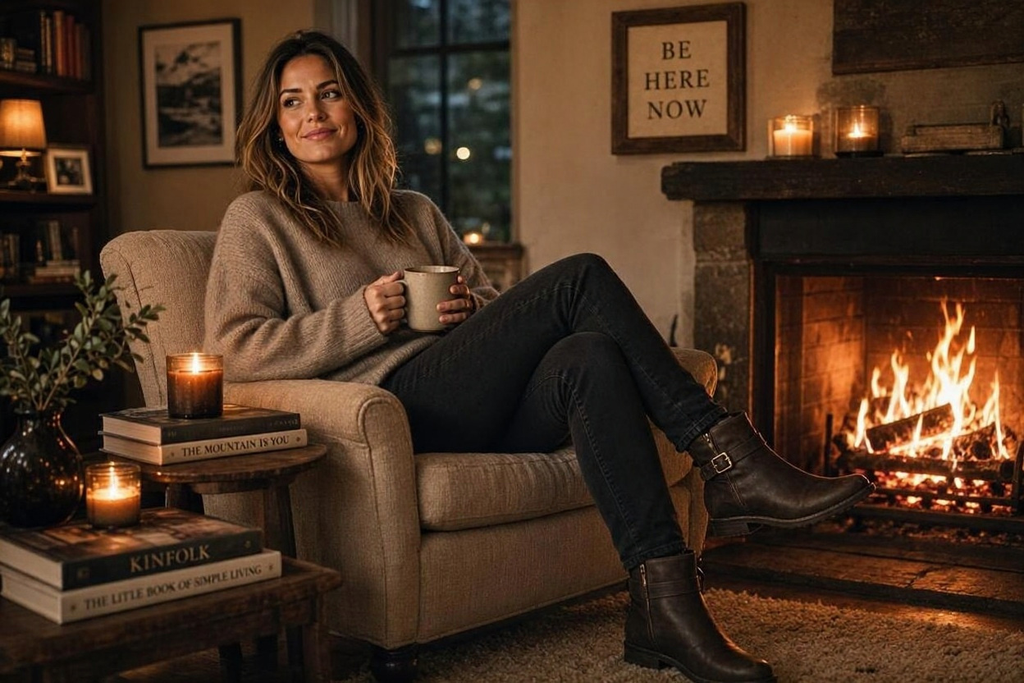
Ankle boots are the most versatile winter shoe, and the most misworn. The problem is usually the gap between the boot and the hem. Where a trouser or skirt ends, and how much leg shows, decides whether the whole outfit looks balanced.
Several combinations work reliably:
- Straight or slim trousers: the hem should skim the top of the boot or sit just over it. A hem that bunches at the ankle shortens the leg.
- Wide-leg trousers: the hem should clear the boot entirely and fall to the ankle bone or just below, so the boot peeks out.
- Midi skirts and dresses: wear an ankle boot with opaque tights in the same color, which lengthens the leg line. A sleek boot with a pointed or almond toe looks most refined.
- Mini hems: pair them with sheer or opaque tights and a block-heel boot, and keep the top half structured and covered.
Color helps. Matching your tights to your boot creates a continuous line from hem to toe. Contrasting socks can work with a lug sole or Chelsea style but look less formal.
For investment, choose boots by construction rather than by trend. The features that make a boot worth its price are full-grain leather uppers, a leather or good rubber sole that can be resoled, and a shape that is plain enough to wear for several winters. A cobbler can resole a well-made boot, which extends its life far longer than a glued, disposable sole.
The three boot styles most worth owning:
- A black leather ankle boot with a low block heel. It goes with trousers, skirts and dresses, and suits every city above.
- A Chelsea boot in leather with a lugged or rubber sole. It is the most practical option for rain or slush and looks clean with tailoring.
- A knee-high or tall riding boot in smooth leather. It works over leggings and under skirts, and it adds warmth in the coldest cities.
Check fit before you buy. Plus size and wide-calf readers should look at the boot shaft circumference and the opening width, and choose a style with a side zip or elastic gusset so it goes on easily and stays comfortable. A boot that fits at the ankle but squeezes the calf will not get worn, however beautiful it is.
Care extends a boot’s life. Apply a protective spray before the first wear, use cedar shoe trees to hold the shape, rotate pairs so leather can dry, and polish regularly.
How to wear sneakers in winter without losing the luxe feel
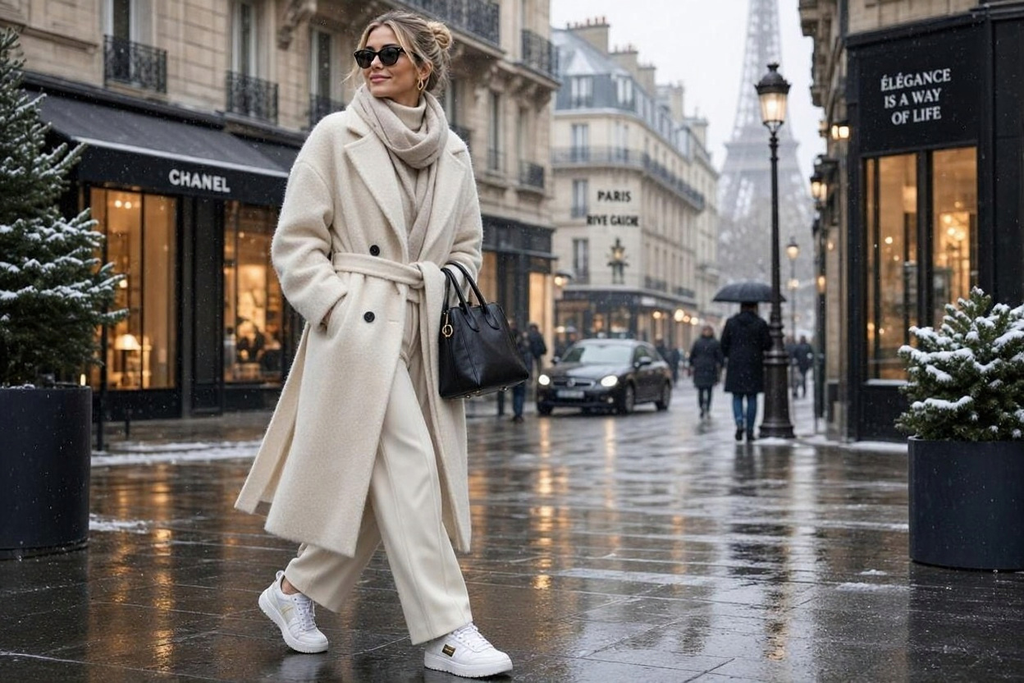
Sneakers can look polished in winter if you choose the right pair and style them with intention. The mistake is treating them as an afterthought, so the whole outfit reads as casual. They work best when the rest of the outfit is refined, and the contrast is deliberate.
Choose a clean, low-profile leather sneaker in white, cream, grey or black. Minimal shapes with no oversized logos or chunky details tend to look more expensive, and leather handles cold and light moisture better than canvas or mesh. A thicker sole gives some insulation from cold pavement. Avoid fabric uppers in wet cities, because they absorb water and stain quickly.
Pair them with tailored pieces:
- A long wool coat, straight trousers and a fine knit. The tailoring makes the sneakers look chosen.
- A midi slip skirt or pleated skirt with a cashmere sweater and a structured coat.
- A blazer, jersey turtleneck and wide-leg trousers hemmed to just touch the shoe.
Sock choice is practical and visible. In cold weather, thin wool or cashmere-blend socks in a neutral tone keep your feet warm without bulk, and they look intentional when a hem rides up. Match the sock color to your trouser or to the sneaker.
In snow, rain or salt, leave the white leather pair at home. Salt stains and water marks are hard to remove, and wet leather can stiffen. If sneakers are your main footwear in a wet city, treat them with a protective spray and wipe them clean each evening. A darker leather sneaker or a waterproof style stays presentable longer.
For plus size readers, look for sneakers with a supportive footbed and a wider toe box, which keep feet comfortable on long days. Footwear with a slight platform sole also helps balance wide-leg trousers and longer coats, so the proportion looks considered.
How to wear white jeans in winter
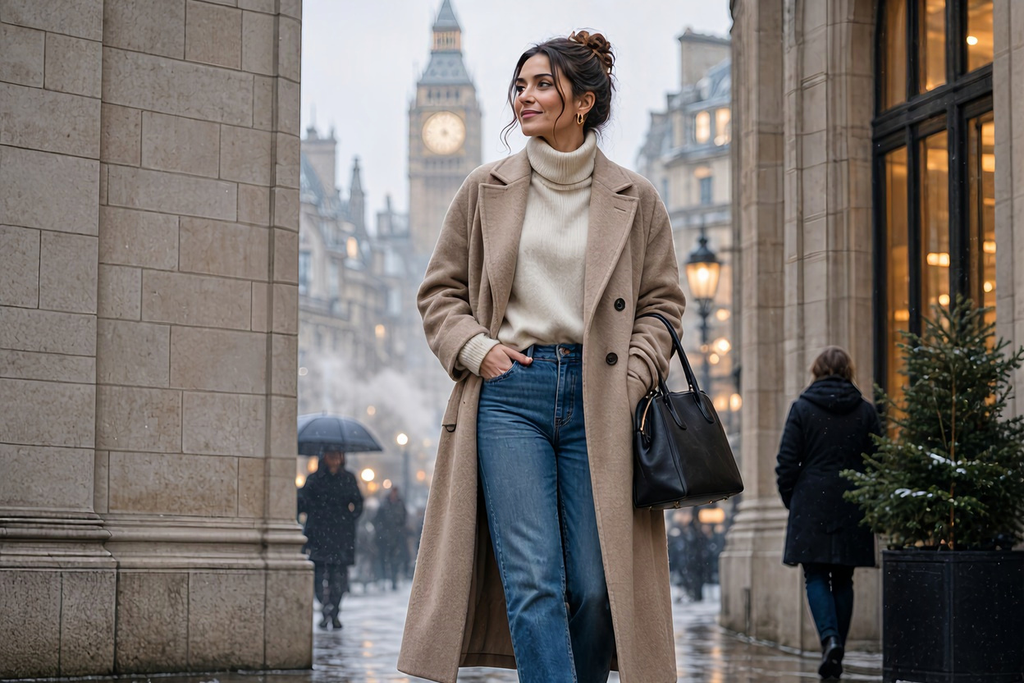
White jeans in winter are not a rule broken. They are a deliberate choice that reads as confident when the details are right. The key is to treat white as a neutral, the same as cream or ivory, and to build the outfit in warm, rich tones around it.
Fabric and color determine whether they look right. Choose an off-white or ecru shade rather than a stark optic white, since the softer tone looks richer in low winter light. Pick a heavy, opaque denim that does not show pockets or underwear through it, with a structured weight that holds its shape. Thin stretch denim looks summery and clings in the wrong places.
Pair them with winter textures and colors:
- A chocolate brown or camel coat, with a cream or oatmeal knit.
- A black leather jacket and a grey cashmere sweater for contrast.
- A navy wool blazer and a striped fine-knit top.
- A long ivory coat for a tonal look, which is expensive-looking in any city.
Boots anchor the outfit. Dark brown or black leather ankle boots look sharp with white denim, and tan or cognac suede adds warmth. Wear them with the hem either tucked into a tall boot or ending just above an ankle boot, so no fabric drags through slush.
Practicality counts. White denim shows splashes, so it is not the best choice for the wettest day in Seattle or a slushy Boston commute. It suits Texas winters particularly well, where days are dry and warm, and works in Chicago on days you are going from a car to a heated space. Treat them with a fabric protector, and have a stain remover ready.
Plus size readers will find that white denim looks flattering when the rise is high, the fabric has substance and the cut is straight or slightly flared, which creates a long vertical line. Wear a longer top or a tailored coat over them to keep the silhouette smooth. For more denim ideas in extended sizes, see our guide to chic denim outfits for plus size women.
How to stay warm and stylish in winter with a small capsule wardrobe
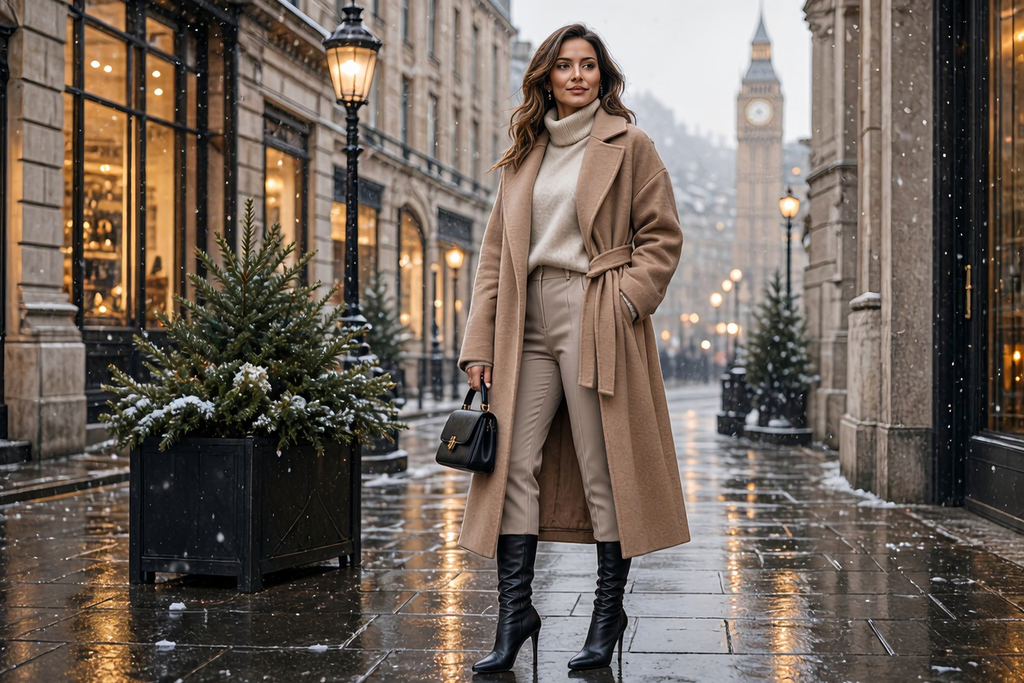
A capsule wardrobe for winter fashion works because the pieces are chosen to combine in many ways. You buy fewer items, spend more on each, and wear them repeatedly. Ten to twelve well-chosen pieces can produce dozens of outfits across all four cities discussed here.
Here is a framework that adapts to your climate:
Outerwear (two pieces)
- One long wool or wool-cashmere coat in a neutral color.
- One weather-specific layer: a water-resistant trench for Seattle, a long down coat for Chicago, or a leather jacket for Texas.
Knitwear (three pieces)
- A fine merino or cashmere turtleneck.
- A crewneck sweater in a second neutral.
- A heavier knit cardigan or sweater for the coldest days.
Bottoms (three pieces)
- Tailored wool trousers.
- A midi skirt in a fluid fabric that moves over tights and boots.
- Dark or off-white denim in a heavy weight.
Footwear (two pieces)
- A leather ankle or Chelsea boot.
- A tall boot or clean leather sneaker, depending on your city and routine.
Finishing pieces
- A wool or cashmere scarf.
- Leather gloves.
- A structured bag in a rich color.
Keep to a tight palette of three or four colors that work together, such as camel, cream, black and chocolate, or navy, grey, ivory and burgundy. When every piece coordinates, you can reach into your closet and know it will work, which makes dressing easier on cold mornings.
Quality over quantity means checking fiber content and construction. Natural fibers such as wool, cashmere, silk and leather last longer, keep their shape and breathe better. Check seams, linings and buttons, and avoid pieces that pill or lose shape after a few wears. Plan to wash or dry-clean according to the label, store knits folded rather than hung, and brush wool coats to remove dust.
Plus size readers should apply the same framework with extra attention to tailoring. A good tailor can shorten sleeves, take in a coat waist, hem trousers and adjust a blazer so that investment pieces fit as though they were made for you. That cost spreads over many seasons, and it is what makes a simple capsule look luxurious.
For more ways to combine these pieces, browse 21 women’s winter outfit ideas that look expensive. For finishing touches, from scarves and gloves to the right handbag, read how to build classy winter outfits from coat to handbag.