
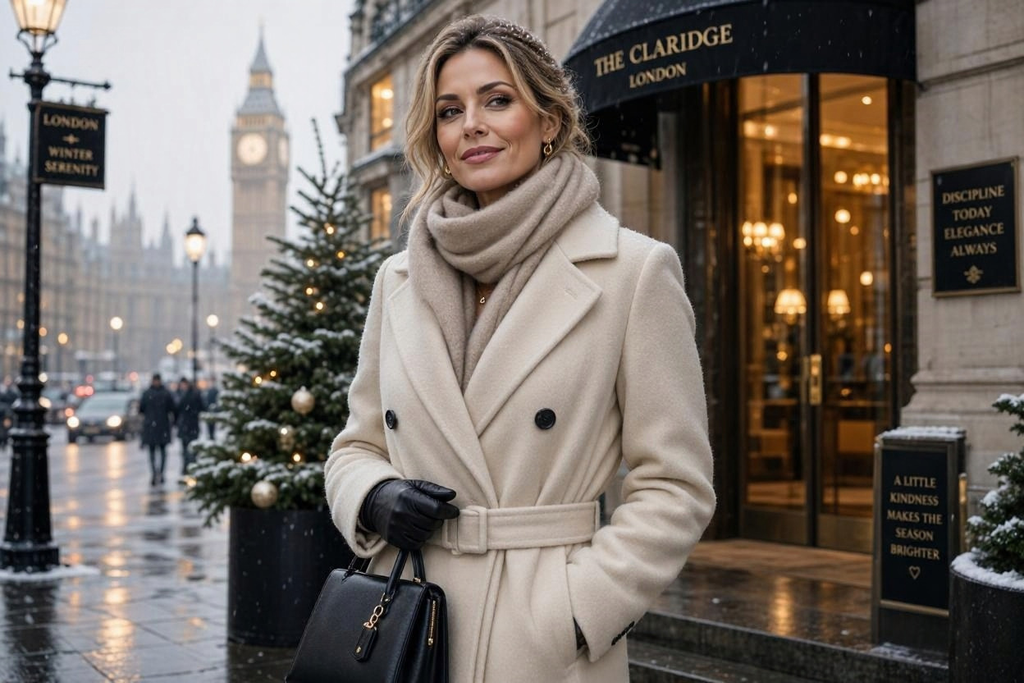
Classy winter outfits come from a small set of decisions made consistently, and the price of any single piece matters less than those decisions. Winter makes the decisions easier to see, because you are layering, and every layer is visible. A coat, a scarf, a pair of shoes and a bag are each judged against the others.
This guide works through the principles first, then applies them piece by piece, from the coat to the handbag. If you want finished looks to browse, the winter outfit ideas that look expensive roundup covers that. This piece covers the rules behind them.
What makes an outfit look classy, and how to look classy in winter

Four principles do most of the work: fit, fabric, restraint and finish.
Fit comes first. A garment that follows your shoulders, ends where it should and moves with you looks considered, whatever it cost. A garment that pulls, gapes or swallows you looks accidental.
Fabric is what the eye reads next. Wool, cashmere, silk, leather and fine knits have a weight and a surface that synthetic blends rarely match. Fabrics that drape and keep their shape look refined. Fabrics that cling, pill or shine unevenly do not.
Restraint means limiting the outfit to one or two points of interest. A strong coat with quiet knitwear underneath looks deliberate. A strong coat, a loud scarf, statement boots and an oversized logo bag compete with each other.
Finish covers the details: pressed fabric, polished shoes, a lint-free coat, a bag whose hardware is intact. Winter is hard on all of these, so check them before you leave the house.
How to tailor a winter coat so it becomes the anchor of the look
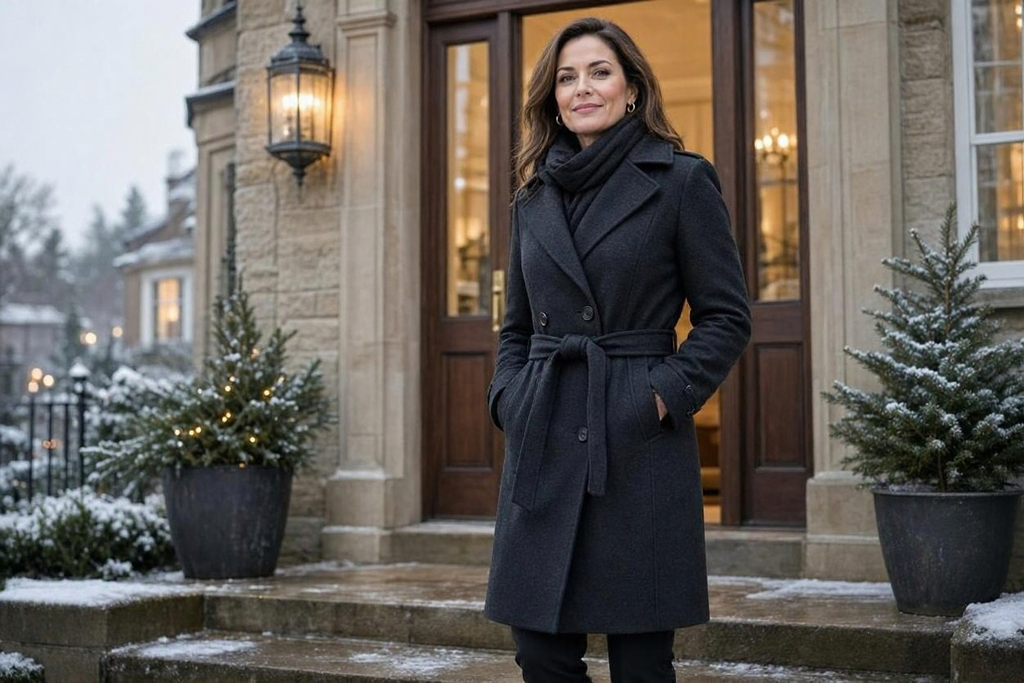
Start with the coat, because it is the outermost layer and sets the impression before anyone sees the rest. A tailored coat in a solid, muted color (camel, charcoal, navy, black or cream) works with nearly everything you own.
Check three fit points before you buy or alter:
- Shoulders: the seam should sit at the edge of your shoulder bone. A tailor can do very little about shoulders, so this is the one point to get right in the store.
- Sleeves: they should end at or just past the wrist bone, with room to wear a sweater underneath.
- Length: a hem near the knee or just below suits most outfits. A midi or longer hem reads more dramatic and pairs well with slim trousers and boots.
Try the coat on over the thickest knit you plan to wear with it. A tailor can usually shorten sleeves, adjust the hem and take in the waist or sides, and these alterations change the look more than most accessories can. Button the coat, check the lie of the lapels, and look at your back in a mirror. A coat that pulls across the back or bunches at the waist will look unrefined however good the fabric.
How to dress up jeans for winter
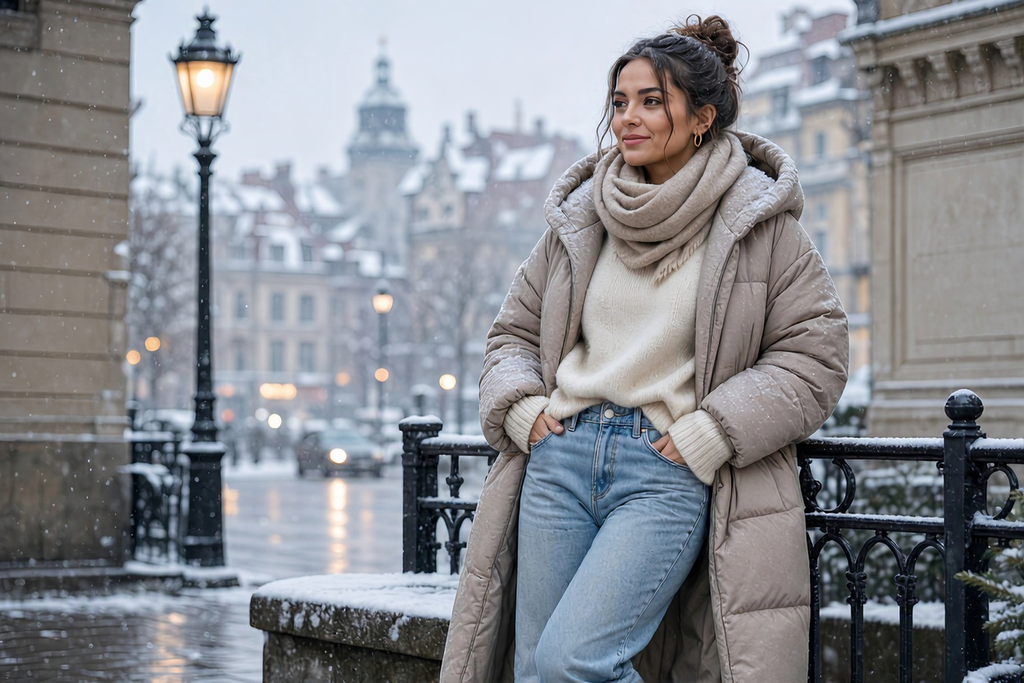
Dark, structured denim is the easiest route. Choose a straight or slim-straight leg in a deep indigo or black wash, with no heavy distressing and no bright stitching. The hem should reach the top of the shoe or sit slightly over it, so the line from waist to floor stays clean.
Then raise everything around the jeans. A fine-gauge turtleneck or a silk blouse, the tailored coat, polished shoes and a structured bag turn jeans from casual into smart. Keep the palette tight: two or three related colors reads far more expensive than five.
For more ways to style denim in different cuts and washes, the guide on how to wear denim outfits goes into detail.
How to wear loafers in winter
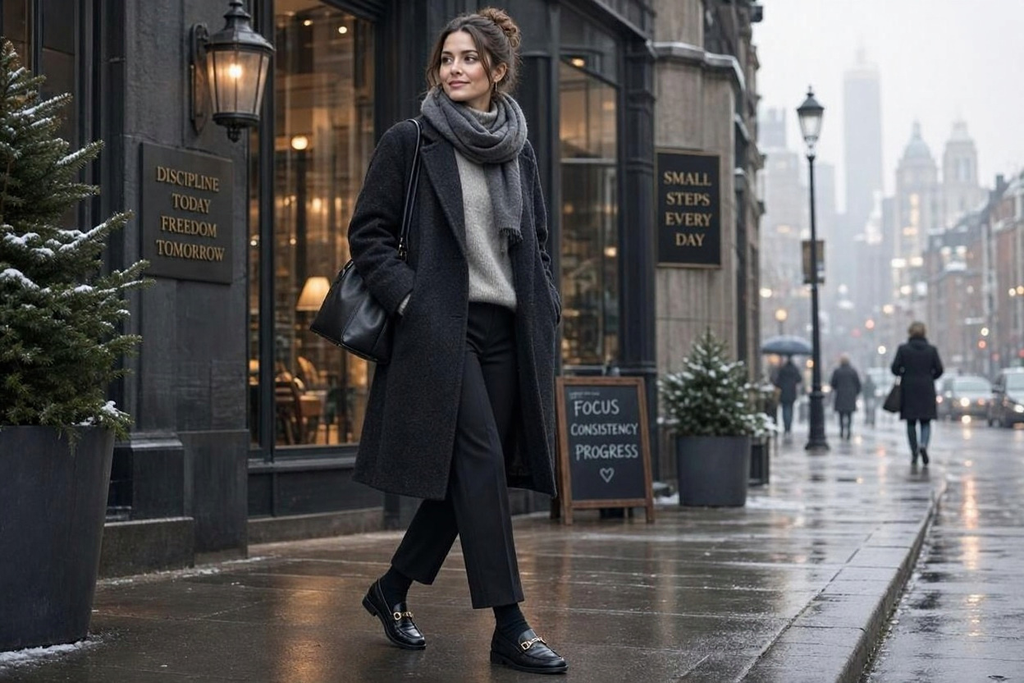
Loafers look refined in cold weather when the leather and sole are right. Choose a leather that handles damp, such as smooth calf or a treated suede, and a sole with some grip. A thin leather sole on wet pavement is slippery and wears out quickly.
Pair them with hosiery or fine wool socks that match the trouser color, so the leg stays one line. Cropped trousers that show a little ankle, or full-length trousers that just graze the shoe, both work. A lug sole loafer reads more casual and suits jeans. A slim sole loafer suits tailored trousers and a long coat.
Keep them polished and dry. Salt stains on leather show immediately and make an otherwise good outfit look neglected, so wipe the shoes when you come indoors and use a protective product before the season starts.
How to style a silk scarf in winter
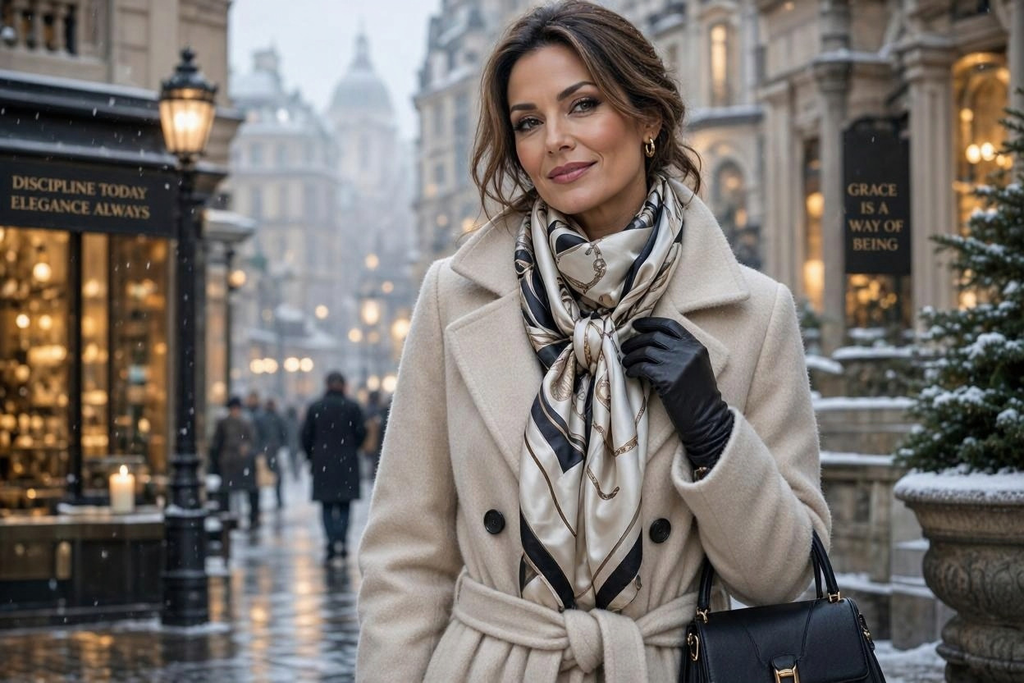
A silk scarf adds color and texture near the face, where it flatters most. Silk does not insulate well, so wear it with the warmth already in place: tucked inside a coat collar, knotted loosely over a knit, or looped once at the neck under a lapel.
A few tied options:
- Folded and knotted at the neck, with the knot at the side, suits a crisp shirt or a turtleneck.
- Tucked into an open coat adds a line of color down the front.
- Tied to a bag handle gives a plain handbag a second use for the scarf.
Choose a scarf whose colors appear somewhere else in the outfit, such as the bag, the shoes or the coat lining. When the scarf is the one patterned piece, let everything else stay solid.
Neutral and smart casual winter outfits for women that work all week
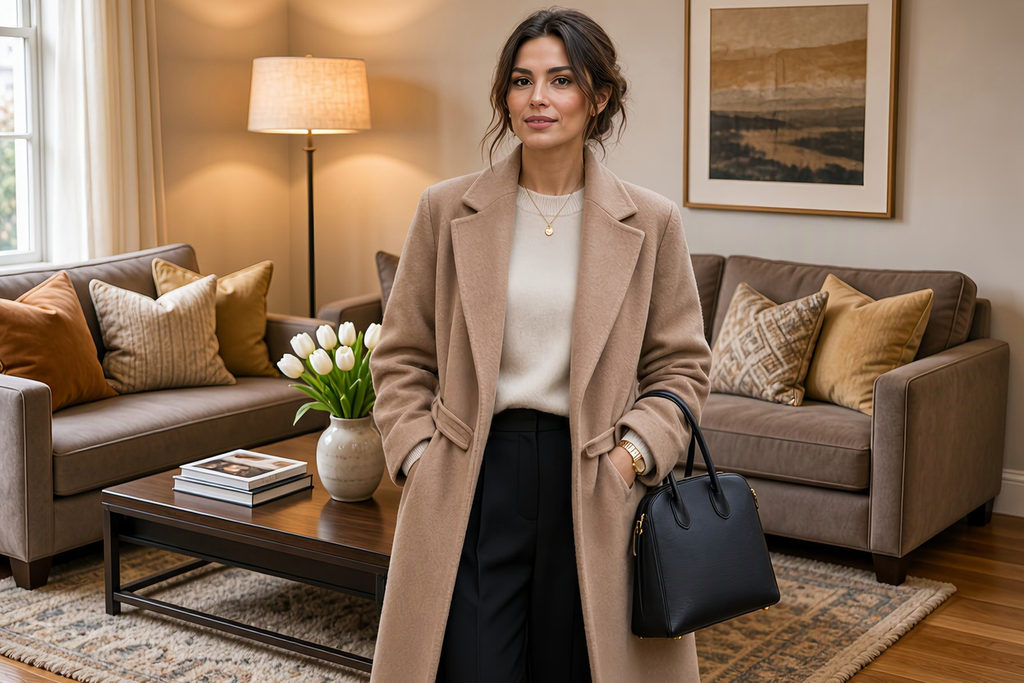
A neutral wardrobe is one built around a few base colors that mix freely: black, navy, camel, cream, grey and chocolate brown. Because the pieces coordinate, a small number of them produces many outfits.
A workable weekly base looks like this:
- A tailored coat in camel or charcoal
- Two fine knits, one in cream and one in a dark neutral
- Dark straight jeans and one pair of wool trousers
- A silk blouse
- Loafers and a pair of knee-high boots
- A structured bag in leather
From there, change one element at a time. Wool trousers, a cream knit and loafers suit the office. The same knit with dark jeans and boots suits a weekend lunch. Swapping the knit for the silk blouse moves the outfit toward evening without any new purchase. For more finished combinations, the winter fashion ideas for every forecast and occasion article shows how these pieces adapt to different weather.
What to wear to a winter ball or gala: formal winter outfits and classy dresses
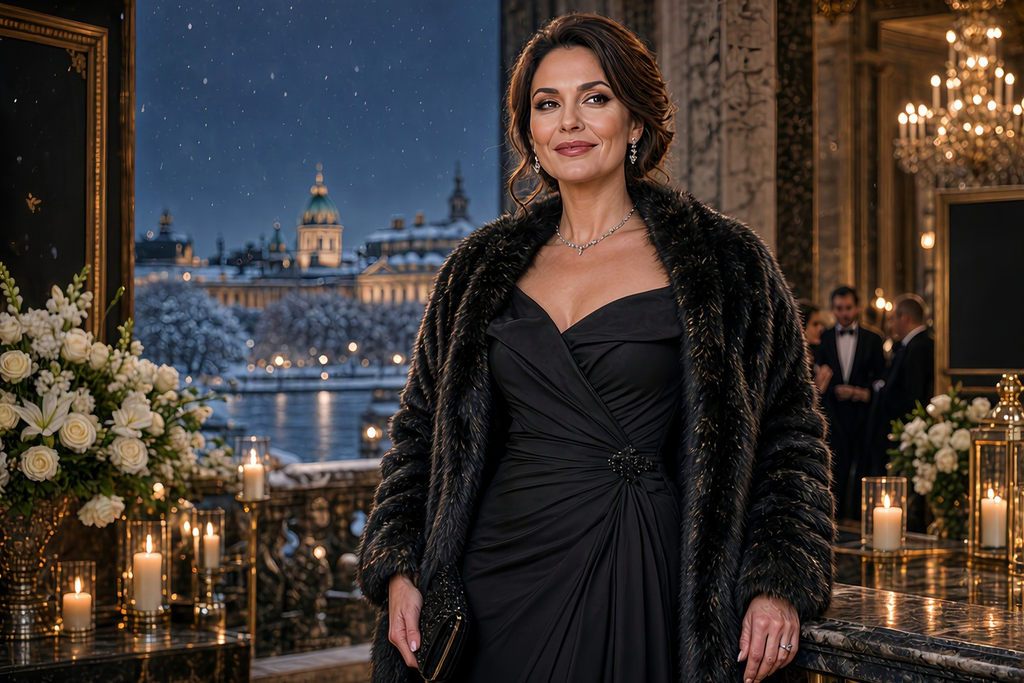
Formal winter dressing follows the same four principles with richer materials. Velvet, satin, crepe and heavy silk all suit the season. A floor-length gown in a deep color such as emerald, burgundy, midnight blue or black looks right in winter lighting, and a sleeved or high-neck cut handles cold venues without a bulky layer over it.
Long sleeves are one of the most useful options for a winter evening, since they keep the line of the dress unbroken. The article on elegant long sleeve dresses for fall and winter occasions covers specific cuts and lengths.
For the outer layer, a long tailored coat in wool or a velvet or satin wrap works better than a short puffer, because it matches the length of the gown. Choose a clutch or a small evening bag in a metallic or in the same fabric family as the dress. Keep jewelry to one focal piece, either earrings or a necklace, and let the dress carry the rest.
The winter handbag that finishes the outfit
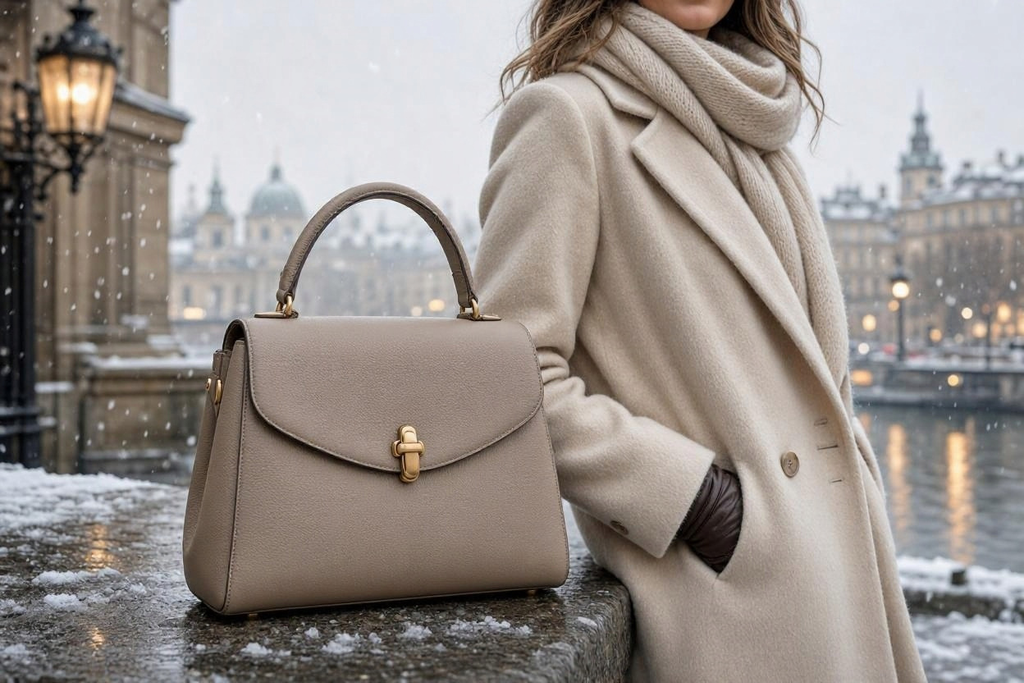
The handbag is the last decision, and it should repeat something already in the outfit: the leather tone of your shoes, the color of the coat, or the hardware of your belt. A structured bag in smooth leather holds its shape under a coat sleeve and stays presentable in damp weather. Slouchy, unlined bags tend to sag against thick winter fabrics.
Practical points matter in winter. The strap should fit over a coat shoulder, or the bag should have a handle short enough to carry by hand. Gloves, a scarf and a phone need room without distorting the shape. Dark or mid-tone leathers hide weather marks better than pale ones.
Match the size to the occasion: a medium tote or top-handle bag for daytime, a small structured shoulder bag for dinners, a clutch for formal events. For help deciding which pieces earn a place in your collection, see the list of fashion accessories every woman should own.