
Building a wardrobe that looks luxe starts with fit, moves to a small set of pieces you actually wear, and ends with styling habits that make ordinary clothes look considered. This guide follows that order, covering sizing, a capsule wardrobe, the rules of dressing well, two workhorse pieces, an honest look at Shein, and the first decisions for anyone thinking about a clothing line of their own.
What is my women’s clothing size, and how to read a sizing chart
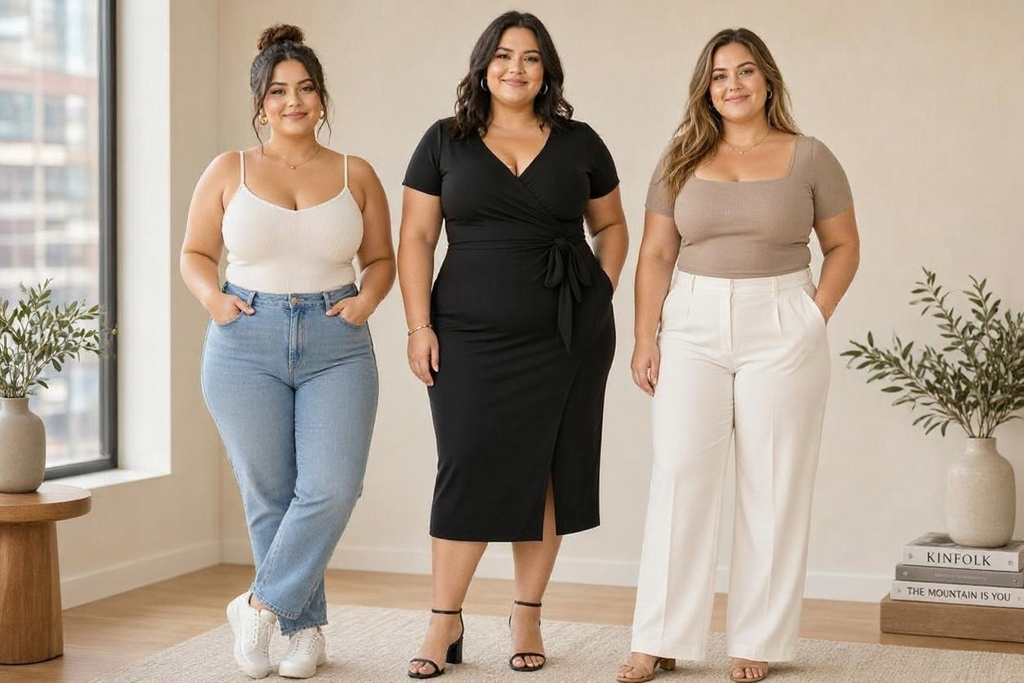
Your size is not a single number. It is a set of body measurements that you match against each brand’s chart, and the same person can be a different labeled size in three different shops. Brands cut to their own fit models and their own idea of a “medium,” so the label tells you very little until you compare it with the chart.
Take three measurements with a soft tape measure, wearing thin clothing or underwear:
- Bust: around the fullest part of the chest, with the tape level across the back.
- Waist: around the narrowest part of your torso, usually just above the navel. Breathe out normally and do not pull the tape tight.
- Hips: around the fullest part of the hips and seat, with your feet together.
Write the numbers down once and keep them in your phone. Add two more that matter for specific garments: your inseam for trousers, and the distance from the base of your neck to the point where you want a dress or skirt to end.
How to read the chart
Find the chart on the product page or the brand’s size guide, not a generic one. Compare each of your measurements to the matching column. When you fall between two sizes, decide by garment type. For woven fabrics with no stretch, such as a tailored shirt or a fitted trouser, the bigger measurement usually decides the size, because a garment can be taken in but rarely let out. For knits and stretch fabrics, the smaller size can work if the fabric recovers its shape.
Check whether the chart lists body measurements or garment measurements. Body measurements describe the person the size is meant to fit. Garment measurements describe the clothing laid flat, and they include the room for movement. If a chart gives garment measurements, you want them to be a little larger than your body numbers, and how much larger depends on the style.
Read the fit notes and the reviews. Phrases such as “runs small,” “cut generously” or “size up for layering” are more useful than the chart alone. A tailor can then close the last gap: shortening hems, taking in waists and adjusting sleeve length are routine alterations, and they are often what separates clothing that fits from clothing that looks made for you.
What is a capsule wardrobe and how to build a women’s wardrobe around one
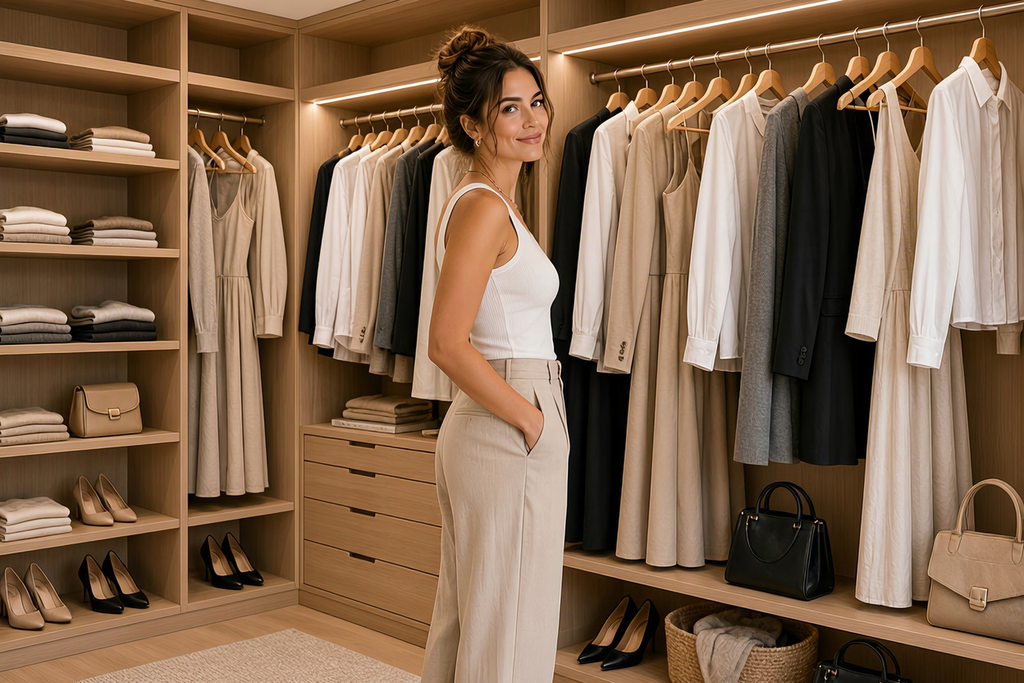
A capsule wardrobe is a small collection of pieces that all work together, so that most of the tops, bottoms and layers can be worn with most of the others. The size of the collection is up to you. What defines it is that every item has several uses and nothing sits unworn because it matches only one outfit.
Start with a palette
Choose two or three neutrals as the base and one or two accent colors. Navy, camel, cream, black, gray and white are common bases because they combine easily. Accents can be anything you already reach for, such as burgundy, olive or a soft blue. A tight palette is the single biggest reason a capsule looks expensive: the outfits read as coordinated even when the pieces come from different places.
Choose the core pieces
A workable women’s wardrobe usually contains these categories:
- Two or three tops in different weights: a crisp shirt, a fine knit, a simple tee.
- Two bottoms that fit exactly: tailored trousers and a skirt or a pair of well-cut jeans.
- One dress that works with and without a layer.
- A blazer or structured jacket, and a coat suited to your climate.
- Two pairs of shoes you can walk in, plus one dressier pair.
- A bag in a neutral shade, and a few accessories.
For denim, the guide to how to wear denim outfits covers cuts and combinations in more depth than a capsule overview can.
Test it before you buy
Before adding anything, count the outfits it makes with what you already own. If the answer is fewer than three, leave it. Go through your current closet first and remove pieces that do not fit, are worn out, or fall outside your palette. Gaps then become obvious, and you can fill them one piece at a time with the best quality your budget allows.
How to dress well as a woman: the habits that make an outfit look expensive

An expensive look comes mostly from fit, fabric, condition and restraint, and very little of it comes from price. These habits are the ones that show up again and again in polished outfits.
Fit comes first
A garment that fits the shoulders, the length of the sleeve and the line of the waist looks deliberate. Shoulder seams should sit at the edge of your shoulder. Trouser hems should clear the floor or touch the top of the shoe, depending on the cut. If something is almost right, alter it.
Fabric shows
Fabric drape, weight and texture are what people notice from across a room. Fabrics with some body, such as wool, heavier cotton, crepe, silk and good-quality knits, hold their shape. Very thin, shiny or clingy synthetics tend to wrinkle, cling and show every seam. Read the composition label and feel the fabric before you buy when you can.
Condition matters more than novelty
Pressed collars, clean hems, no pilling on knits, shoes with intact heels and a bag with unscuffed corners all carry more weight than a new trend. A steamer, a fabric shaver and a shoe repair shop cost little and extend the life of what you own.
Keep the outfit to a limited number of ideas
Choose one point of interest, such as a bold earring, a strong coat or a print, and let the rest of the outfit stay quiet. Matching tones, or a tonal outfit in several shades of one color, looks especially polished because the eye reads it as a single line.
Finish with intention
Accessories complete the outfit rather than decorate it. A belt that echoes your shoes, a watch, a simple pair of earrings and a bag in the right size all signal that the outfit was planned. The article on fashion accessories every woman should own lists the pieces worth buying first.
How to style a white button down shirt five different ways

A white button down is the most flexible piece in a women’s clothing wardrobe. Look for a fabric that is opaque enough to wear without a camisole, a collar that stands up on its own, and sleeves long enough to reach the wrist bone.
- Classic with tailored trousers. Tuck the shirt in fully, add a belt and loafers or pointed flats. Leave the top button open and roll the cuffs once or twice.
- Half tucked with jeans. Tuck only the front into straight or wide leg jeans so the waist is defined and the hem drapes over the hip. Add a structured bag and a slim belt.
- Under a knit. Wear the shirt beneath a fine sweater or a sleeveless knit vest, with the collar and cuffs showing. This adds polish on a cool day and keeps the neckline crisp.
- Open as a layer. Leave it unbuttoned over a fitted tank or tee, sleeves pushed up. This works well over a slip skirt or with tailored shorts when the weather is warm.
- Worn as a dress layer. Wear it over a slip dress, or tie it at the waist over a sleeveless dress. A contrasting texture, such as silk against crisp cotton, makes the combination look styled rather than assembled.
Whichever version you choose, check the collar and cuffs for wear. A white shirt that is yellowed or wrinkled loses its effect immediately, so iron or steam it before you leave.
What to wear with a midi skirt, from shoes to outerwear

A midi skirt ends somewhere between the knee and the ankle, and where it lands on your leg decides which shoes and tops work best. The hem that falls at the widest part of the calf tends to shorten the leg line, so a heel or a pointed toe helps. A hem closer to the ankle suits flats, boots and low heels well.
Tops
Balance the volume of the skirt with a top that is fitted or tucked in. A full or pleated skirt looks best with a tucked tee, a fine knit or a bodysuit. A slim column skirt gives you room for a looser blouse or an oversized shirt, partly tucked.
Shoes
- Ankle boots: pair with a midi that leaves a small gap of leg visible, or with tights in the same color as the boot.
- Knee high boots: choose a skirt that overlaps the boot top so there is no gap between hem and boot.
- Loafers or ballet flats: work with a slim or pleated skirt and give a more relaxed look.
- Heeled sandals or pumps: lengthen the leg line and suit evening or office dressing.
- Clean white or neutral sneakers: suit a casual look, especially with a knit top and a structured bag.
Outerwear
Choose a jacket that ends above the hem so the skirt remains visible. A cropped blazer, a short trench or a fitted leather jacket works well. With a long coat, the coat hem should either fall clearly below the skirt or sit a few inches above it. A coat ending at nearly the same place as the skirt hem creates an awkward double line. For cold months, the guide to winter outfits that look expensive has more layering ideas that suit a midi skirt.
Is Shein good quality for women’s clothes? What to check before you buy
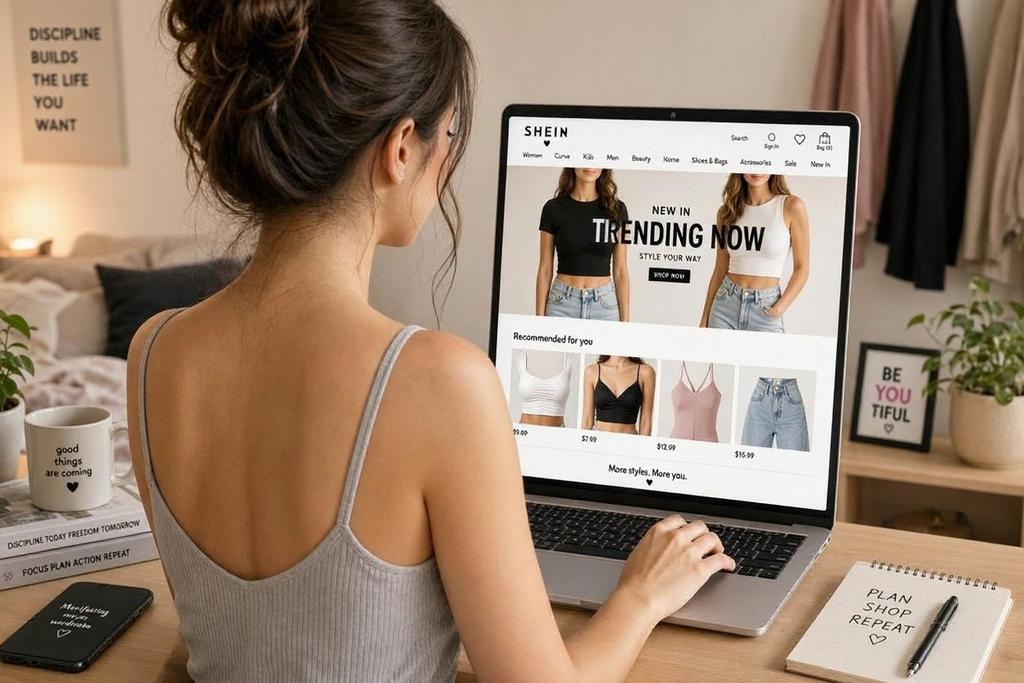
Quality at Shein varies from item to item. Some pieces are acceptable for their price, and others arrive with weak seams, thin fabric or a fit that differs from the photos. Because the range is so large and the items come from many different suppliers, you cannot judge the whole site by one purchase, good or bad.
What to check on the product page
- Fabric composition. Look for the percentage breakdown. Items that are mostly polyester are usually thin and can feel warm and look shiny, though polyester is not automatically poor. Natural fibers or blends are more breathable but are not always better made.
- Customer photos. Reviews with real photos show how the item looks in daylight, on a body, without styling. Pay attention to photos that show the same item on a body type close to yours.
- Review comments on fit and fabric. Look for repeated remarks about sizing, transparency, scratchy lining or color that differs from the listing.
- The size chart for that specific item. Do not rely on your usual size, because the cut can differ from one item to the next.
- Return terms. Policies can change, so read the current return conditions before ordering and check who pays for return shipping.
What to check when it arrives
Turn the garment inside out. Look at the seams for loose threads and uneven stitching, check that the zipper runs smoothly, hold the fabric up to the light to see whether it is see-through, and try it on with the clothing you plan to wear underneath. Wash it once according to the label before you decide to keep it.
Where it makes sense
Simple, low-risk categories, such as a basic tee for layering or a trend item you expect to wear a few times, carry less risk than tailored pieces. Items that depend on structure and fabric quality, such as coats, blazers, tailored trousers and anything meant to last for years, are better bought where you can inspect the fabric or where the brand lists detailed materials and fit information. Whether the brand fits your values around sustainability and labor is a personal question that deserves its own research, and you should make that call with current information.
Women’s clothes online or women’s clothing stores near me, plus what to wear for a wedding

Both routes work, and each suits different purchases.
Buy in a store when fit and fabric are the deciding factors: coats, jeans, tailored trousers, shoes and anything you will wear often. You can feel the weight of the fabric, check the movement and leave with it the same day. Many stores also offer alterations or can refer you to a tailor.
Buy online when you already know your measurements and the brand’s sizing, when you want a wider choice of sizes and colors, or when a store nearby does not carry what you want. Order with the return policy in mind, try everything on at home with the shoes and underlayers you plan to wear, and return what does not fit properly. Searching “women’s clothing stores near me” is also a good way to find independent boutiques and tailors that online browsing does not surface.
What to wear to a wedding
Start with the invitation. The dress code, the time of day, the venue and the season tell you almost everything. Daytime and outdoor weddings suit lighter fabrics and softer colors, and evening ceremonies suit deeper tones and more formal lengths. Avoid white, ivory and anything that could read as bridal, and check whether the couple has asked guests to avoid certain colors.
A midi or maxi dress in a fabric with some drape is a safe, polished choice, and a shawl or tailored jacket covers you for a ceremony in a place of worship or a cool evening. If you want a dress with sleeves, the guide to styling a long sleeve dress as a wedding guest walks through outfits from daytime to black tie.
How to start a women’s clothing line: the first decisions to make

Launching a clothing line involves more decisions than designing, and most of them are about who you are making clothes for and how you will produce them. Settle these before you spend money on samples.
Define the customer and the gap
Describe the woman you are designing for in specific terms: her size range, the occasions she dresses for, her budget and where she shops now. Then identify what she cannot find. A line built around a real gap, such as workwear in extended sizes or occasion dresses with sleeves, is easier to explain and market than a general collection.
Pick a narrow starting range
Begin with a small set of pieces, perhaps one category and a handful of styles. A narrow range keeps your production costs and your inventory manageable and lets you refine fit before you expand.
Choose a production route
The common options differ in cost, control and minimum quantities:
- Print on demand or white label: you put your branding on existing blanks or ready-made products. It needs little upfront money, but you have limited control over design and fabric.
- Private label: a manufacturer adapts existing designs to your specifications, often with minimum order quantities.
- Cut and sew from your own designs: you work with a pattern maker and a factory or workshop. It gives you the most control and requires the most money, time and technical knowledge.
Whatever you choose, order samples, check fit on real bodies and test the fabric through washing before you commit to a production run.
Work out your numbers
Add up the cost of fabric, trims, labor, shipping, packaging, platform fees and returns for each piece. Your retail price has to cover those costs and leave a margin for marketing and your own pay. Pricing from a competitor’s tag without knowing your own costs is a common way to sell a lot and still lose money.
Handle the basics of running the business
Check the requirements in your own country or state for business registration, taxes and labeling rules, including fiber content and care labels. A local small business office or an accountant can confirm what applies to you.
A clothing line can also be built in public: a site, a lookbook and a mailing list give you a place to learn what your customers respond to before you make a large order.